Inequality Quick Hitters
Housing Inequality, Prices, Europe v USA

The Great Recession was Bad
We all know the Great Recession and the havoc that it wrought on the American labor and housing markets.
I recently read a 2020 article from the Journal of Political Economy, Income and Wealth Inequality in America, 1949–2016.
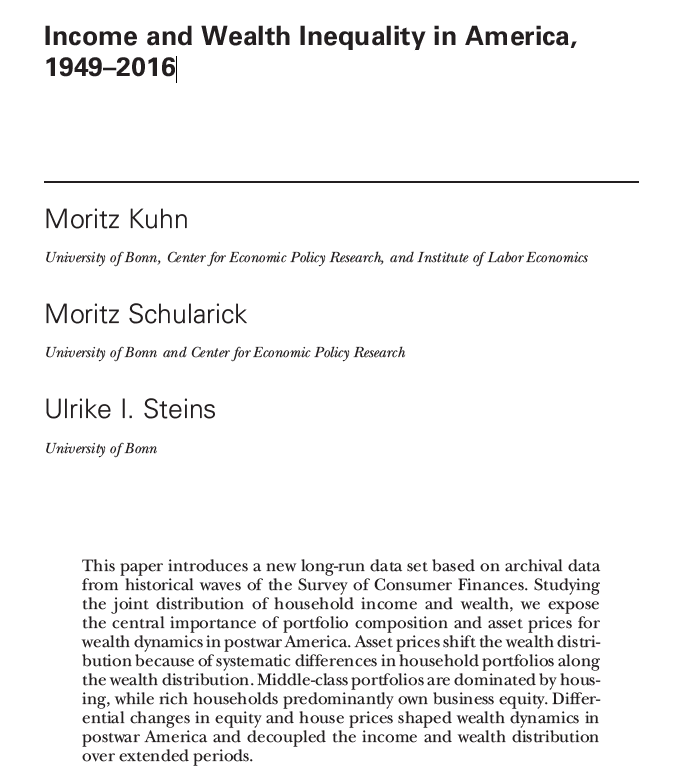
Lots of very nice descriptive trends of inequality. One of those nice, basic, descriptive papers that spell out lots of nice basic knowledge.
Like, inequality trends in income and wealth
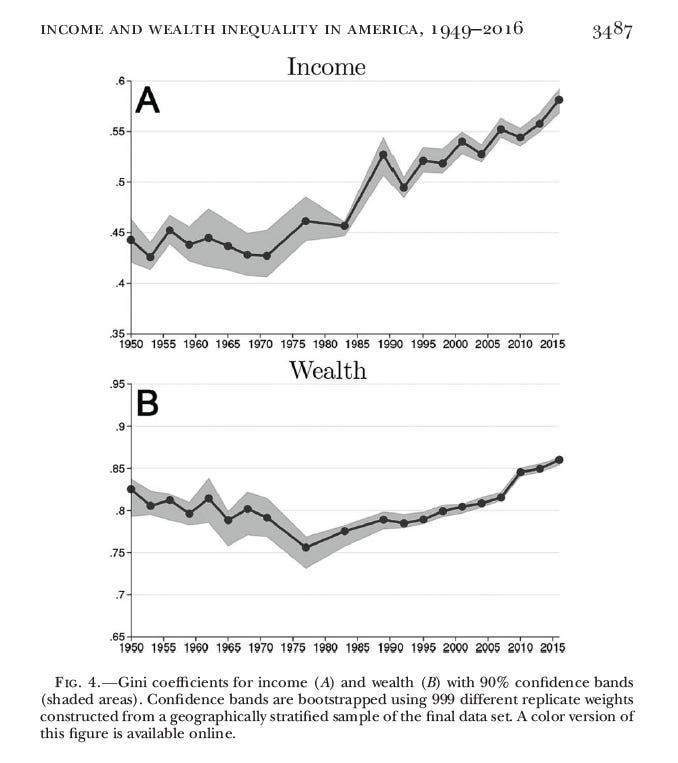
But here’s what caught my attention: wealth to income ratios at different distributional locations (e.g. your wealth is $2,000, your income is $1,000, your wealth to income ratio is 2000/1000=2).
Check out the change among the bottom 50% of wealth holders following the Great Recession.
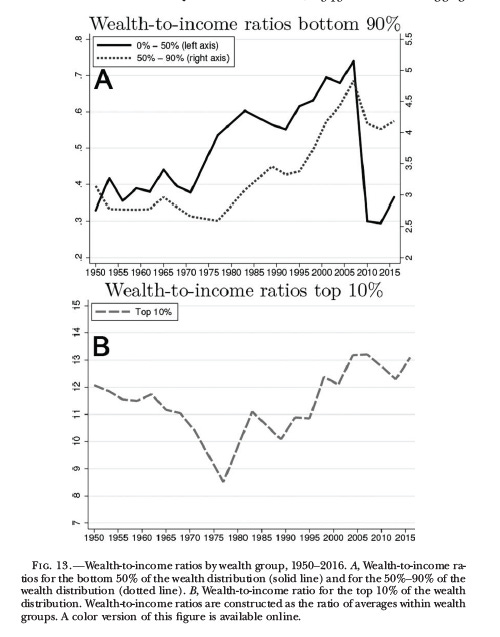
Good lord. Almost 60 years of gains for the bottom half of America were destroyed in a heartbeat. What a disaster.
Of course, we can look at the y-axes on the different graphs. Different scales, perhaps an exaggeration of the drop. But, top 10% and 50-90% lost a few years of upward movement. Not everything. Brutal.
Smaller homes, expensive homes
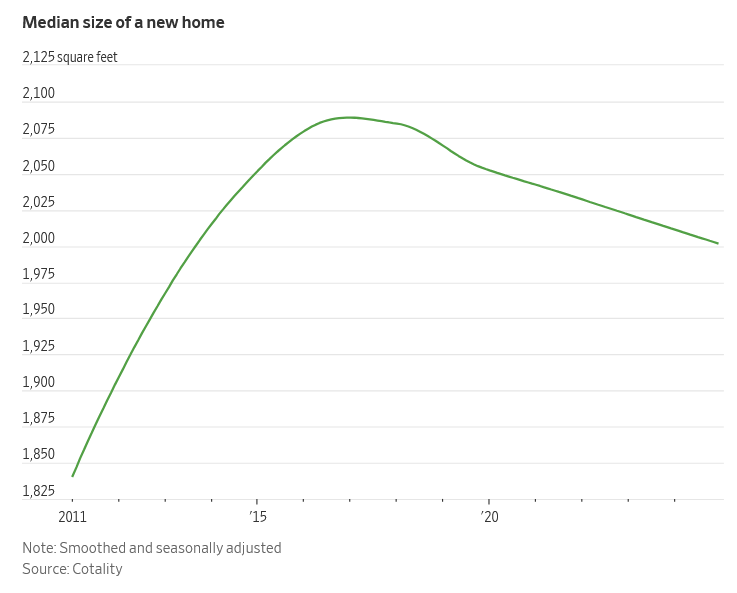
An interesting article from the WSJ last year, on a trend I hadn’t known about. Median home sizes have been shrinking for quite awhile now.

Recent median home sizes peaked around 2016, have been declining since
But the income needed to buy a home has gone up ever so slightly
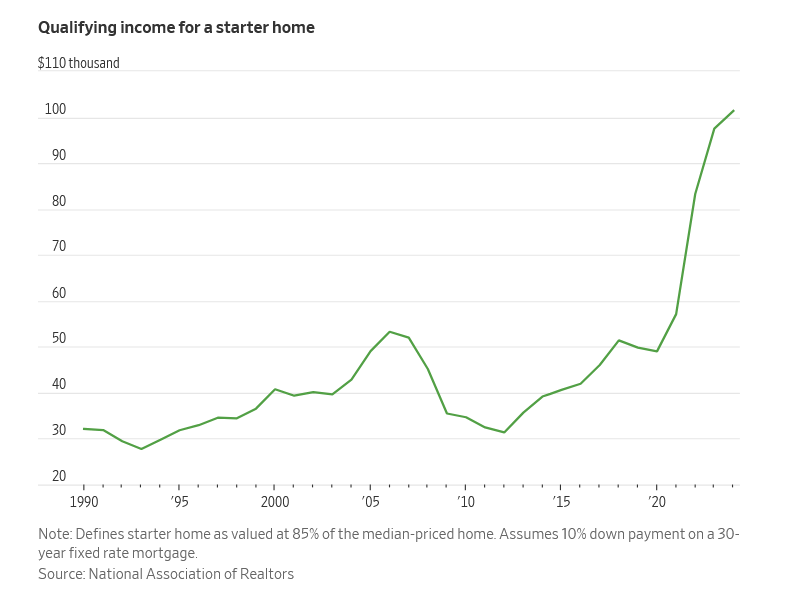
And so, unsurprisingly, the median age of a first-time home buyer has increased by about half a decade
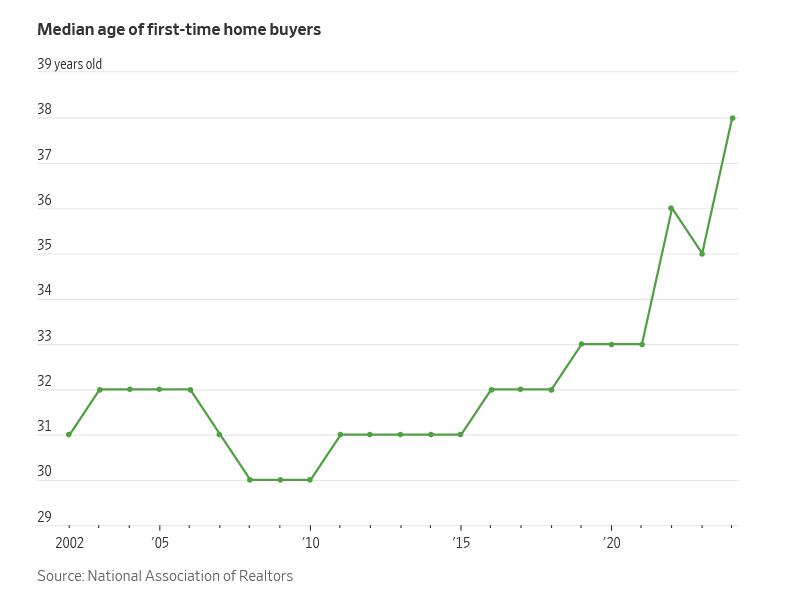
I am starting to think this whole housing affordability thing might be important. I am stressed about it for my kids, and they’re not in middle school yet!
Family size vs housing size
I saw an interesting New York Times article that linked to the below Redfin report
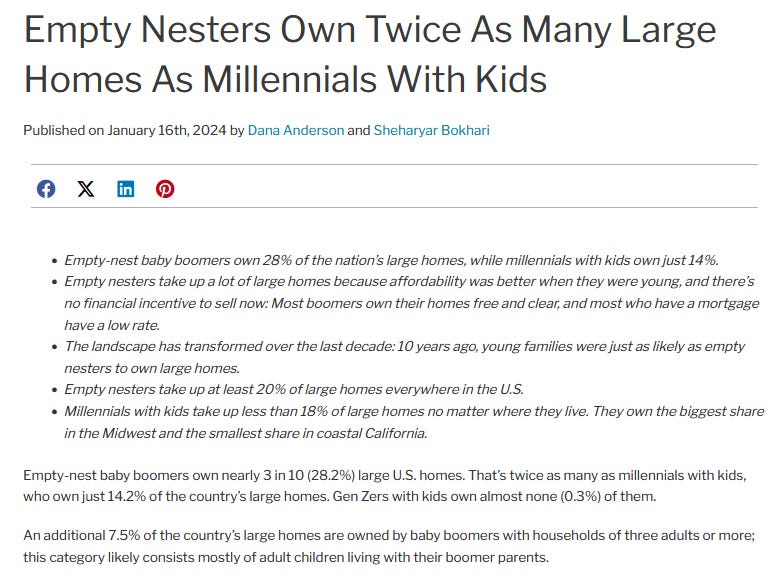
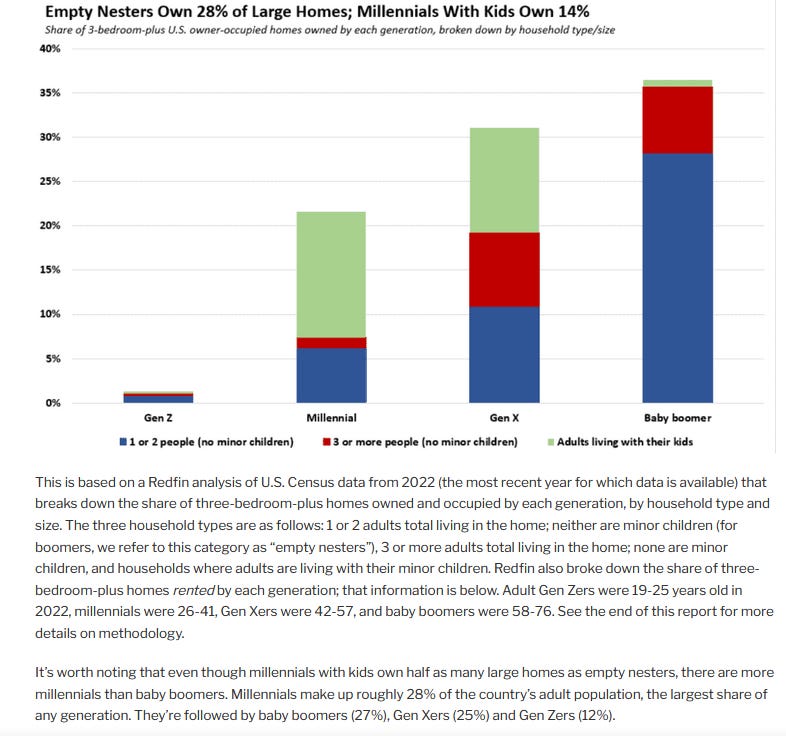
The most common group living in big homes they own (3+ bedrooms) are empty nesters.
Some reasons, all reasonable!
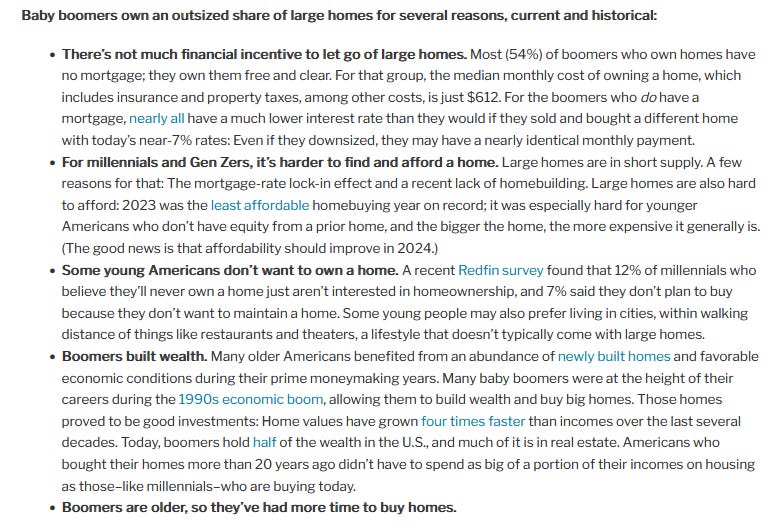
Twice as many empty nesters own big homes as Millennials with kids:
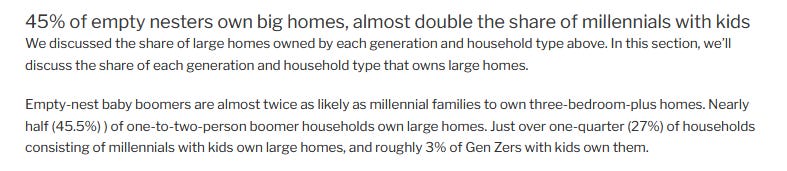
It’s easy to think of this as people making decisions and get caught up in intergenerational warfare. But the last 1/4 century has seen such a wild whirlwind of trends: the collapse of housing construction, good jobs concentrating in unaffordable places, inequality growth, changes in family demographics. Lots of feelings of precarity. Retirement years can be pretty darned uncertain and precarious - makes sense to me why older adults wouldn’t change homes on a whim. I interpret this story less as a generation war and more of an example of many socioeconomic, social, and political moments not being met over decades, resulting in pretty stark cohort patterns.
People care about prices
From EIG, The 2025 American Worker Survey:

The biggest financial stressor on American workers: costs and prices
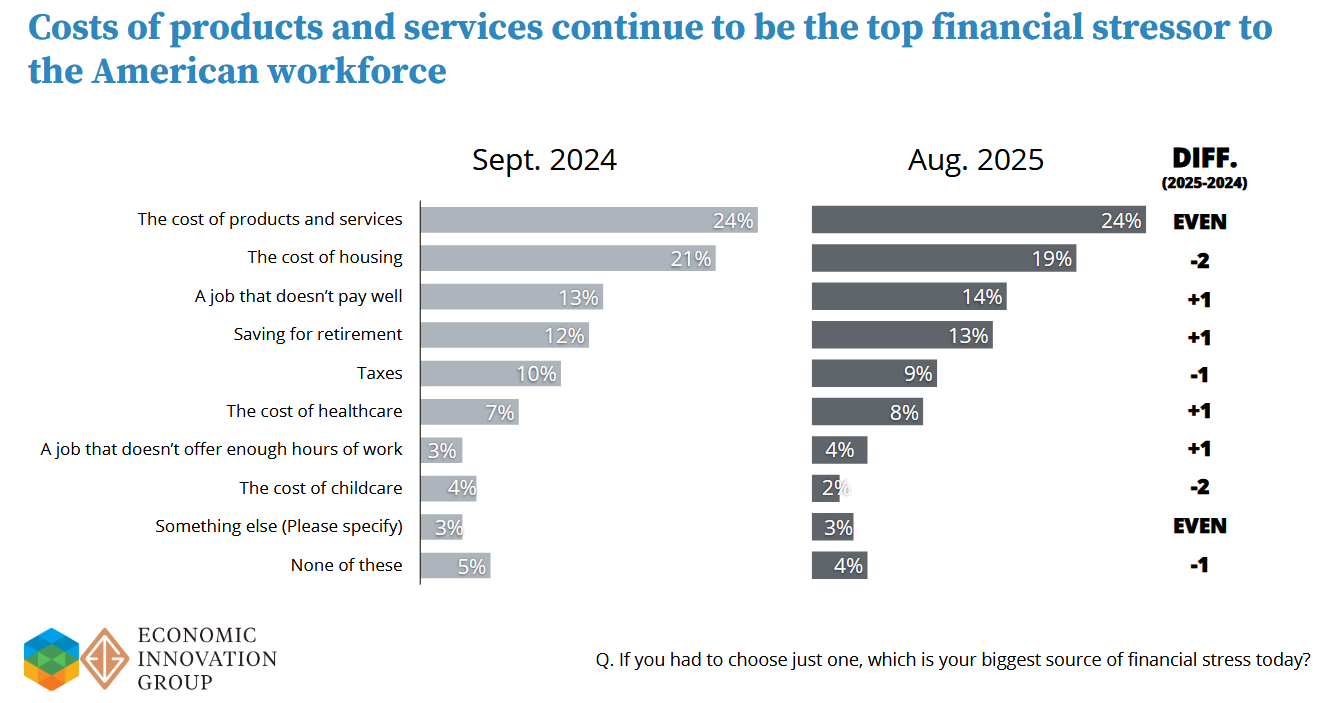
More than housing, more than healthcare, more than childcare, more than low-paying jobs.
This report finds that only about half of the surveyed respondents can pay for essentials with enough money left over for savings, investments, and non-essentials:
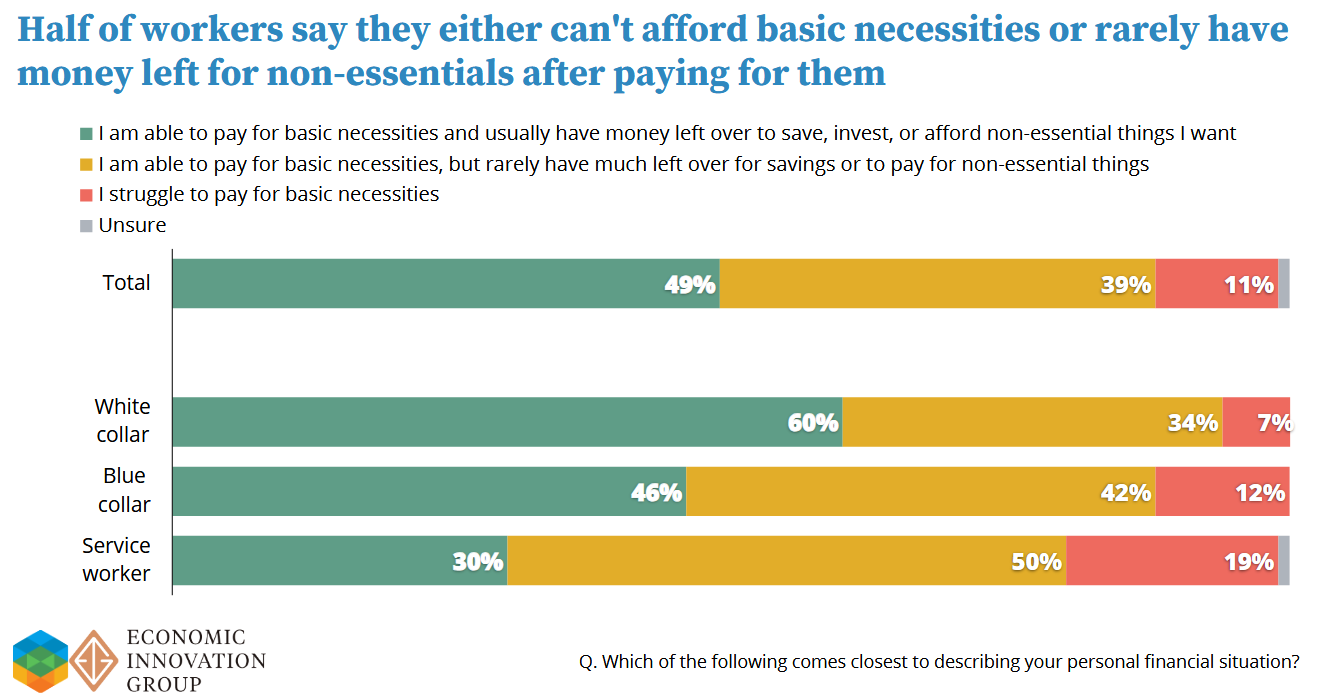
This is a nice reminder to me. Sociologists studying inequality, myself included, are very interested in things like low-paying jobs, in childcare costs, in healthcare, in housing, etc. I can’t remember the last time that I read a sociological study on prices and costs. Well, except for this truly magisterial exception:

But one extraordinary book 14 years ago about the early 20th century agrarian progressives doesn’t do much for today’s world.
America is richer than Europe … wait … is it?
Seth Ackerman, editor at the Jacobin, has an interesting comparison of American versus European economic wellbeing: look at the per capita income of the bottom 95%.

When he does that, many European countries look as rich, or a little richer, than US states:
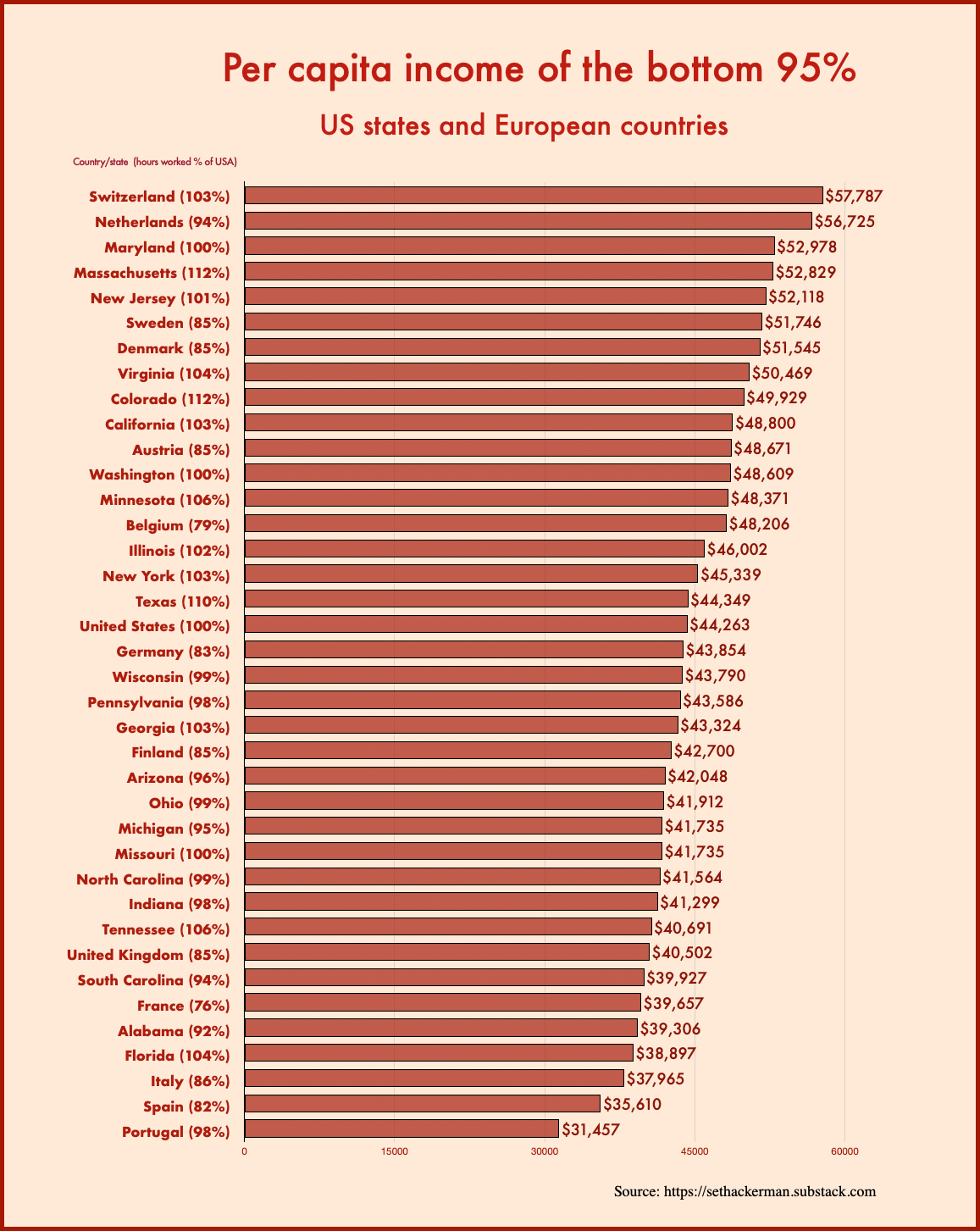
This comparison contrasts with lots of twitter users these days taking pot shots at Europe being substantially poorer than the US.
He has a nice follow up that goes into a few weedsy decisions, such as pre- versus post-tax and transfer, different income concepts used for comparisons, etc.
I’m not sure if I buy this 100%. Seth Ackerman seems like a thoughtful fellow. But the Jacobin is a pretty strongly left leaning outlet. If I read a post by Elon Musk that billionaires were great, or by Tyler Cowan that libertarianism is in fact correct, I’d be a little wary of the clean match between empirics and conclusions. That doesn’t invalidate points by the original authors! But just a point to keep skepticism high, especially if conclusions align sympathetically with one’s priors. Yet in any case, this is a useful contrary comparison to blunt claims that Alabamans are substantially richer than Swedes. It’s one I’ll probably be playing around with in the near future to see if I can get the same results.